
 Glyphosate resistance was confirmed in the UK in a single population of Italian rye grass in February this year. Glyphosate resistance is a significant problem worldwide – glyphosate resistance was first documented in 1996 and has been reported in 31 countries and sixty reported species, primarily in agricultural environments, where glyphosate is used to control weeds to improve yields.
Herbicide resistance can be compared to antibiotic resistance, in the sense that problematic weed infestations that would normally be controlled using glyphosate now require alternative interventions. Fortunately there are other methods of control available, including physical controls that plants have no realistic prospect of establishing resistance to. However, glyphosate resistance is a drag on yields and financial viability of modern farming methods.
Glyphosate acts on a single stage in the metabolic processes common to all plants, and resistance can develop through an evolutionary process but is also artificially induced in crop species by companies selling “glyphosate resistant” crops, which can allow farmers to spray glyphosate less discriminately in order to knock down weeds in fields and other settings. There are implications if either variety of glyphosate resistant plant are to spread.
Resistance tends to emerge in the field through a process of mutation-selection-survival-establishment. Plants that reproduce sexually develop mutations – this is a feature of all forms of sexual reproduction, so it is inevitable. Some mutations (usually extra copies of a specific gene known as EPSPS) allow plants to survive glyphosate applications at the label dose. Selection will then occur if glyphosate is applied to a field population including these plants – plants without the mutation will be killed by the herbicide application and mutated plants may survive. Selection is likely to occur fairly regularly given the widespread global use of glyphosate – however, a further stage must take place before a resistant plant could start to establish: the plants must survive to reproduction in order to pass on the mutations that allowed it to survive the glyphosate application. This survival can generally be prevented by integrated pest management (IPM) and the use of non-herbicide measures such as hand-weeding and ploughing weeds back into the field before it is re-sown. If the resistant weeds cannot survive to reproduce, then the resistant genes will not be passed on and populations of glyphosate-resistant plants will not become established.
IPM could also include the use of additional herbicides in addition to glyphosate; this could reduce the incidence of selection because other herbicides act via different mechanisms – meaning that plants with glyphosate-resistant mutations would still most likely be vulnerable to the alternative herbicide.
Once established, herbicide-resistant species will have a competitive advantage over traditional populations – just like invasive species. Which brings me to the real question of this blog – what about glyphosate resistance in invasive species?
Glyphosate resistance would cause major problems if it were to develop in Japanese knotweed but would also be problematic in other invasive species, as glyphosate is one of the most commonly-used methods for controlling invasive weeds in the UK. Currently, none of the species classed as invasive in the UK have been found to show glyphosate resistance anywhere in the world, based on the data from weedscience.org. But what are the possibilities that invasive species in the UK could develop resistance?
Fortunately, resistance should not develop in UK populations of Japanese knotweed because the Reynoutria japonica in the UK all comes from a single female clone; it does not reproduce sexually, therefore does not mutate. It is theoretically possible in hybrid knotweed (Fallopia x bohemica) but somewhat unlikely, given the low incidence of this plant in the UK and the limited numbers of plants in a stand of hybrid knotweed. In this case the lack of “mutation” means resistance is unlikely to develop.
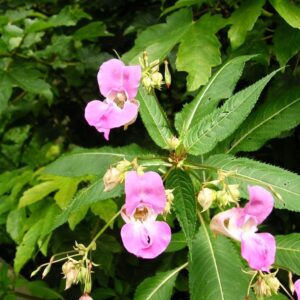
Plants like Himalayan balsam and montbretia, where the plant reproduces prolifically and sets thousands of new plants annually in a stand are much more likely to generate mutations. The ideal solution to prevent selection in these populations would be to use a combination of control methods or non-herbicide controls. This is particularly relevant to Himalayan balsam, where suitably-managed hand-pulling can be an effective management strategy in some cases (although for larger infestations or those on embankments or other hazardous areas, this may not be suitable. Prevention at the “selection” stage is therefore possible but limited.
Other invasive plants, including Giant hogweed, have a similar ability to spread by seed and create large numbers of plants, but are biennial (meaning that they do not flower in their first year of growth). If properly controlled over a multi-year programme, any flowering plants after the first year of application should be a significant warning sign that treatment is not proceeding according to plan. The timing of applications and inspections should be planned accordingly (particularly as application during vegetative phase of growth can be less effective as the herbicide is not taken down into the roots). Flowering plants should be manually controlled as soon as they are spotted (usually using a spade to cut across the tap-root or similar alternative approach) in order to prevent seed being set. In the case of giant hogweed specifically, this presents its own challenges due to the safety implications of working with this plant.
Here IPM can prevent “survival” – and it is this phase which invasive plant specialists (and their clients!) can do the most to minimise the chances of invasive plant species developing resistance in the UK.
As opposed to in agriculture, where weed control is a secondary goal (with the main priority being the effective culture and harvest of desirable plant species), for professional weed control companies, preventing the survival of the target weeds is the primary goal and management plans and contingency plans are put in place with the sole purpose of achieving success in the long-term.
By offering and effectively delivering suitable recommendations and by following these through, we would hope to ensure that invasive species are effectively controlled and that plants with resistant mutations would not survive the programme. In some cases, such as infestations near rivers (where new seeds will regularly be washed onto the site), overall control can be effectively impossible, so additional measures and considering the use of alternative herbicides or other IPM methods is of greater importance, as well as monitoring of the success of treatments.
One foreseeable scenario which could create a risk of invasive plants developing resistance would be for a client to instruct early-season glyphosate sprays and subsequently cancel a programme of control (or for someone to simply carry out single sprays with no follow-up). This would potentially allow for selection and survival of plants with resistant mutations. If this were to occur, then hopefully in the long term, if no further glyphosate applications were made, the resistant mutations would not be selected for again and would therefore be less likely to become widely prevalent in the population.
Currently herbicide resistance in invasive plant species it is not something that INNSA is worried about, but that doesn’t mean it isn’t a risk, or that there is any excuse for bad practice.
Chris Oliver
Technical